2025 Austin Rattler 50k
On Saturday, I placed second female overall at my first ultramarathon, the Austin Rattler 50k, and qualified for the 2026 Leadville 100. While I’d love to credit my result to pure skill and endurance, I believe a few key choices I made before the race is what actually gave me an edge over my competition. Below, I’ll share my training, race-week preparation, and race strategy so you can make the most of your Austin Rattler experience.
Training
I'll be the first to admit that my training for this race was unconventional. I had an interesting few months leading up to the Rattler. I took the entire summer off running while backpacking through Europe and when I finally returned to running in August, I really struggled to enjoy it. Every run felt like a chore so I did the bare minimum to prepare for the Imogene Pass Run , which I ran in early September.
For context, Imogene is a 17-mile mountain race with 5,000 feet of climbing at 11,000 feet of altitude. My “training” included a handful of 10-mile runs, a few shorter ones, and one long run that topped out at just 11 miles and 2,000 feet of gain. Not exactly preparation I was planning on but since most of that running was done between 6,000 and 11,000 feet, I think the altitude training saved me.
Then we went to Park City for the month. I was pretty badly injured from my shoe choice at Imogene, so I spent at least the first week biking. When I was finally able to run again, I was so motivated. I remember thinking, I’ll never take running for granted again. That mindset didn’t last long. I had a few good runs, but soon they all started to feel miserable again. After two weeks of dragging myself through the Wasatch Mountains, cutting runs short, and once again doing the bare minimum, I had an epiphany: running is supposed to be fun!
So I started ignoring my Strava mileage charts, stopped creating “optimal” routes with perfect mileage, took the pressure off, and just ran the trails I wanted, when I wanted. I took days off when I felt like it, biked when I felt like it, and most importantly — ran for fun. The difference was night and day. I started running farther and faster, and even snagged a few Strava segments without trying. I finally found my running spark again.
Then we bought a van...
Working, running, van building. Pick two. Another two week running hiatus was inevitable. I logged about thirty some miles total in the two weeks we spent working on the van before our next trip. But these runs were different. I knew I wasn’t going to get the mileage I wanted so I focused on speed. I kept the runs shorter but faster and more intense. That shift kept running fun while still feeling productive because I was getting in quality work, seeing progress, and even got my first Boulder County CR.
We spent the two and a half weeks before the race in Bentonville. The trails in the Ozarks are insanely technical and rocky, much more so than what I was used to, which made for great training. Free from van-building duties, I was finally able to start increasing my mileage again. I kept up the speed work too, since I’d noticed big improvements in my overall fitness from the sessions I did in Boulder.
Two weeks out from the Rattler, I signed up for a local 5K with no expectations and no real preparation. I ended up winning overall with a PR of 18:53. I was genuinely shocked, especially considering my previous 5K (though not my PR) was somewhere in the 21s.
Cool, I was faster, but that doesn’t equate to endurance, which I obviously was going to need for a 50k. After a long track workout, I ended up with some calcaneofibular ligament pain in my right ankle, so I took a little time off running to bike instead. By the Sunday before the race, my ankle was healed, but I was definitely feeling daunted by the 31 miles ahead. So, I made the risky decision to do a 16-mile race simulation six days before the race. It ended up being my best trail run performance to date (aside from the Rattler, probably). I averaged an 8:17 pace on rocky, technical trails, and when I compared that to workouts before past marathons, I knew I was in phenomenal shape.
The week of the race, I took it very easy with a few walks, easy runs, and a bike ride to preview the course. Below is a detailed look at what I did during race week.
All this to say, don’t make assumptions about your fitness based on your training. It’s easy to compare yourself to other runners and count yourself out before the race even starts. Some people perform much better with unconventional training blocks, and it’s important to remember that running is supposed to be fun. Experiment, enjoy it, and don’t take it as seriously as we often make it out to be!
Race Week
I previewed the course on a bike the Thursday before the race because I’d read countless accounts of runners accidentally going off course, cutting sections, and getting disqualified. I’m so glad I did, because even though the course is marked, it’s extremely confusing. Reveille’s trail system is unlike most, take a look at the maps and you’ll see what I mean.
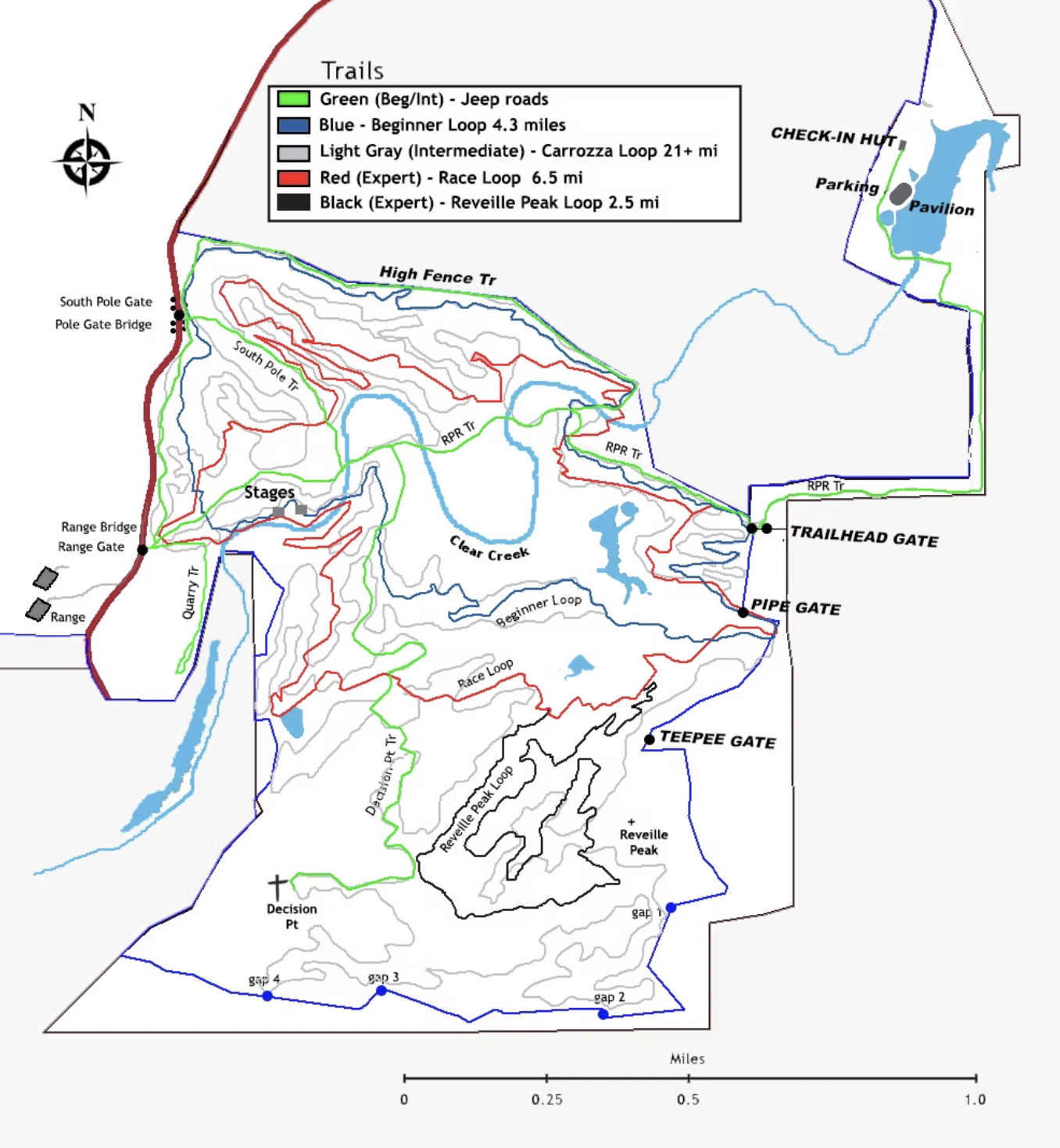
Reveille Peak Ranch Trail Map
I downloaded the course directly from the Austin Rattler website to my Coros, and I’d recommend doing the same. The course is basically impossible to map on Strava because there are sections where you’re just running through a field with no trail or heatmap, and Strava’s route feature will often guide you onto the nearest “legit” trail instead of the official course. Another thing to keep in mind is that these trails are much more technical then you might expect. I was naive before seeing them and definitely underestimated just how challenging the terrain would be.
I think previewing the trails was one of the biggest advantages I had over the rest of the field. I saw so many people go the wrong way, often running in completely the wrong direction. I would highly recommend doing the same, whether on foot or bike. I did however run into a few difficulties accessing the trails. Reveille Peak Ranch is open 24 hours a day, but it doubles as a shooting range, which means the trails aren’t always accessible. I’d recommend texting the ranch staff before you plan to use the trails to confirm.
We were told the trails would open at 3 pm, but there was a gate blocking access just 1.5 miles into the loop because people were shooting. At 3:30 pm, the gate was finally opened. There were several other bikers there, but I was the only one running the loop. I saw a few people in ghillie suits, which was a bit off-putting, but I didn’t hear any gunfire 🤷♀️. The only other issue I ran into was that the bridge over the road for miles 3 to 4.5 was completely closed, and there was gunfire coming from that direction.
I’m not trying to discourage you from doing the Rattler, I just want to give an honest picture of what to expect if you preview the course.
The first mile of the course, up to the gate, is a gradual climb on single track. The trail is a little rocky and washed out, but entirely runnable. After the gate, you turn onto a jeep road and head downhill for about half a mile before turning onto a side trail that eventually connects to another jeep road after crossing a section of granite or perhaps limestone.

Parking Area/Start Line
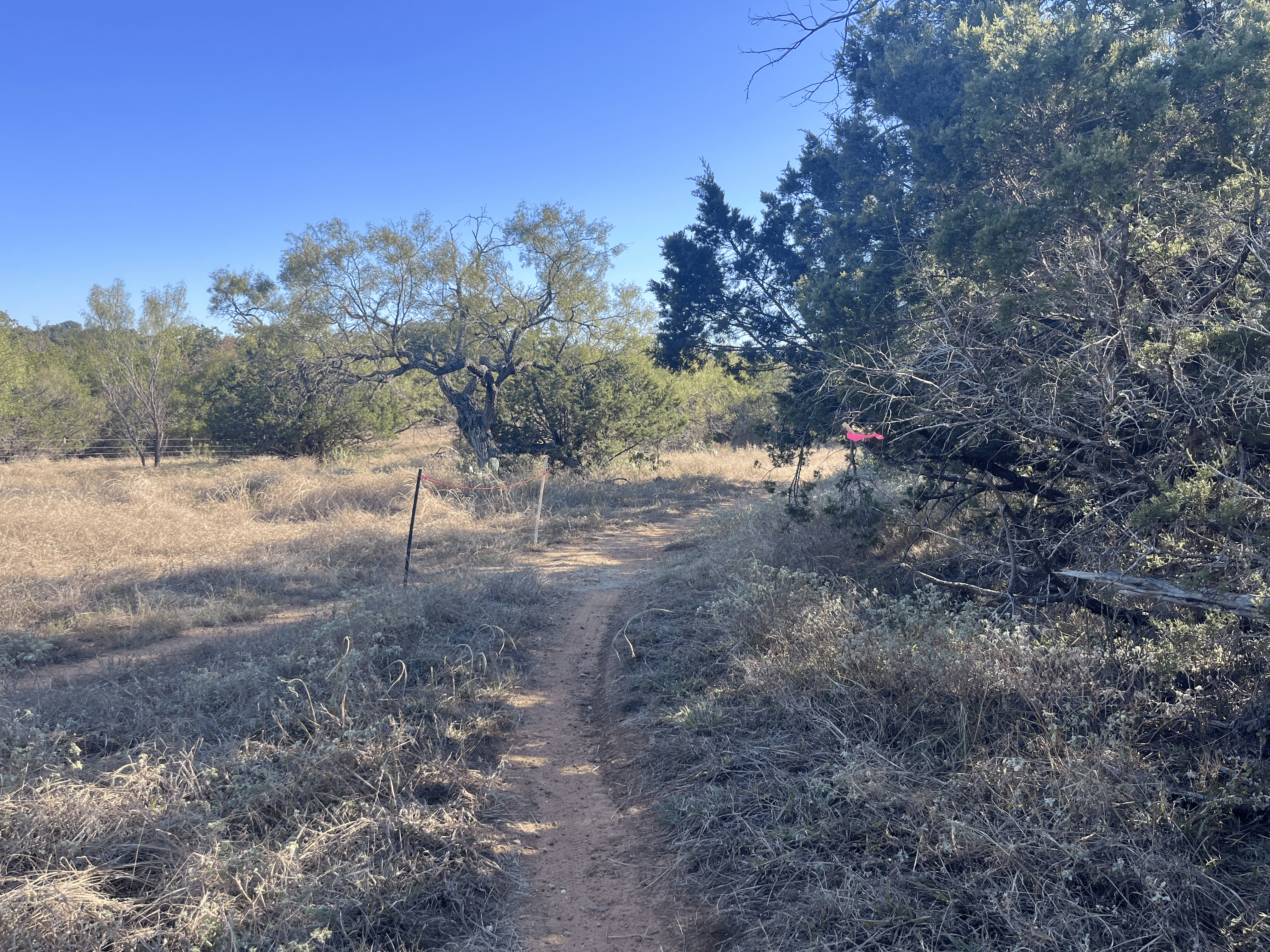
First Single Track Section (~Mile 1)
At this point, you start the first of two major climbs, gaining roughly 135 feet in just under a mile. It isn’t too steep at any point and should be runnable for most people. After the climb, you’ll turn onto another single track and begin the downhill section leading to and across the bridge.

Top of First Climb on Jeep Road
The bridge loop, more like two loops, is partly on jeep road and partly through fields—picture a cross-country course. This section is about 1.5 miles, maybe a little less, and has some hills. With the exception of the “major” climbs, none of these hills are rolling. I found it a little difficult to maintain momentum, but nothing too crazy.
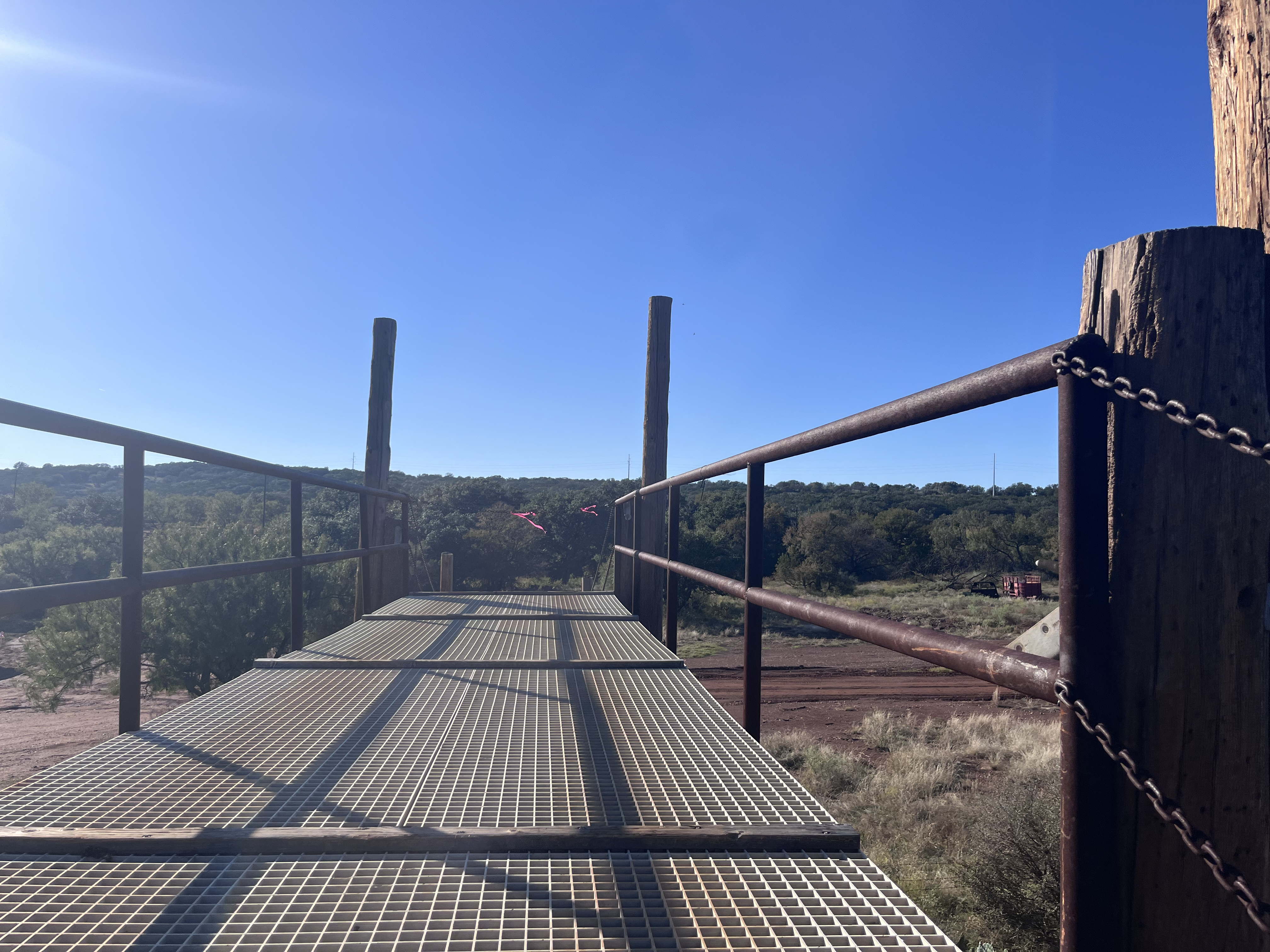
Bridge to Gun Range Loop

Example of a Field Crossing
After the loop, you enter a woody section that starts downhill before flattening out. This was my favorite part of the course. I think these must be popular bike trails because the brush was cleared and the path was in great shape. There’s one climb that feels worse than it actually is and I think it’s because you can see the top from the bottom. For reference, this is the loop that makes a right angle on the course map.
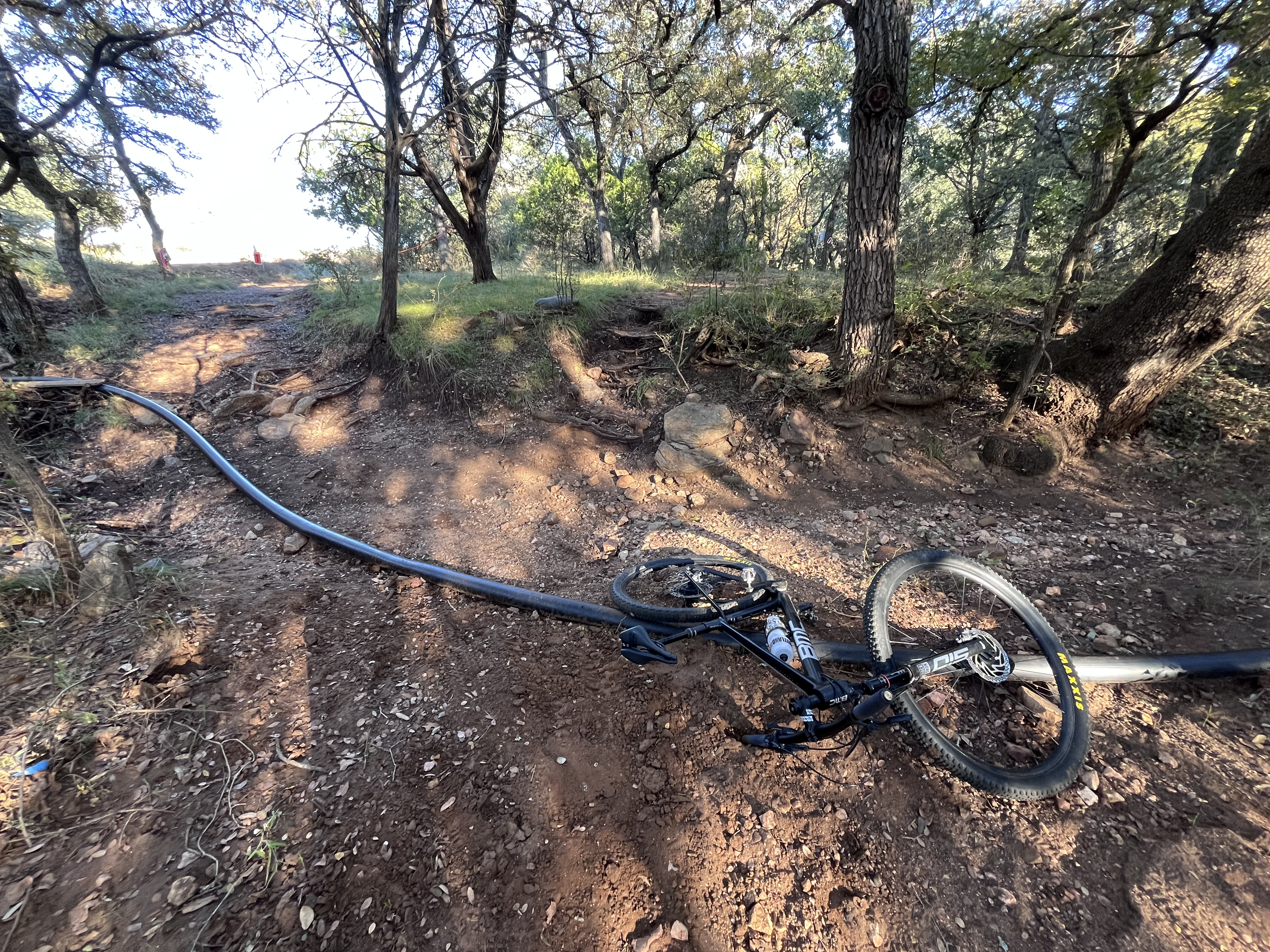
Woody Section (watch out for the tube)
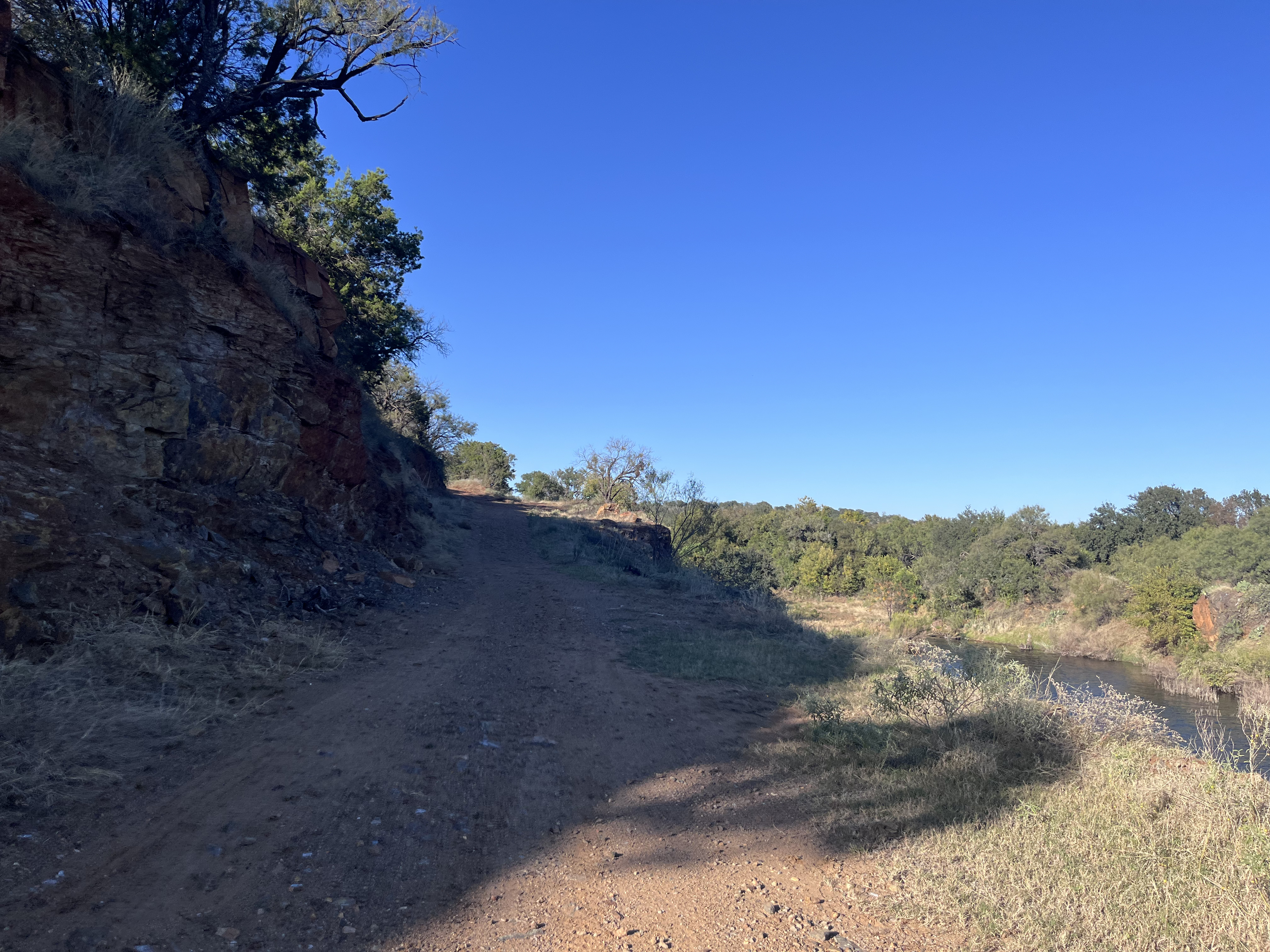
Small Jeep Road Climb
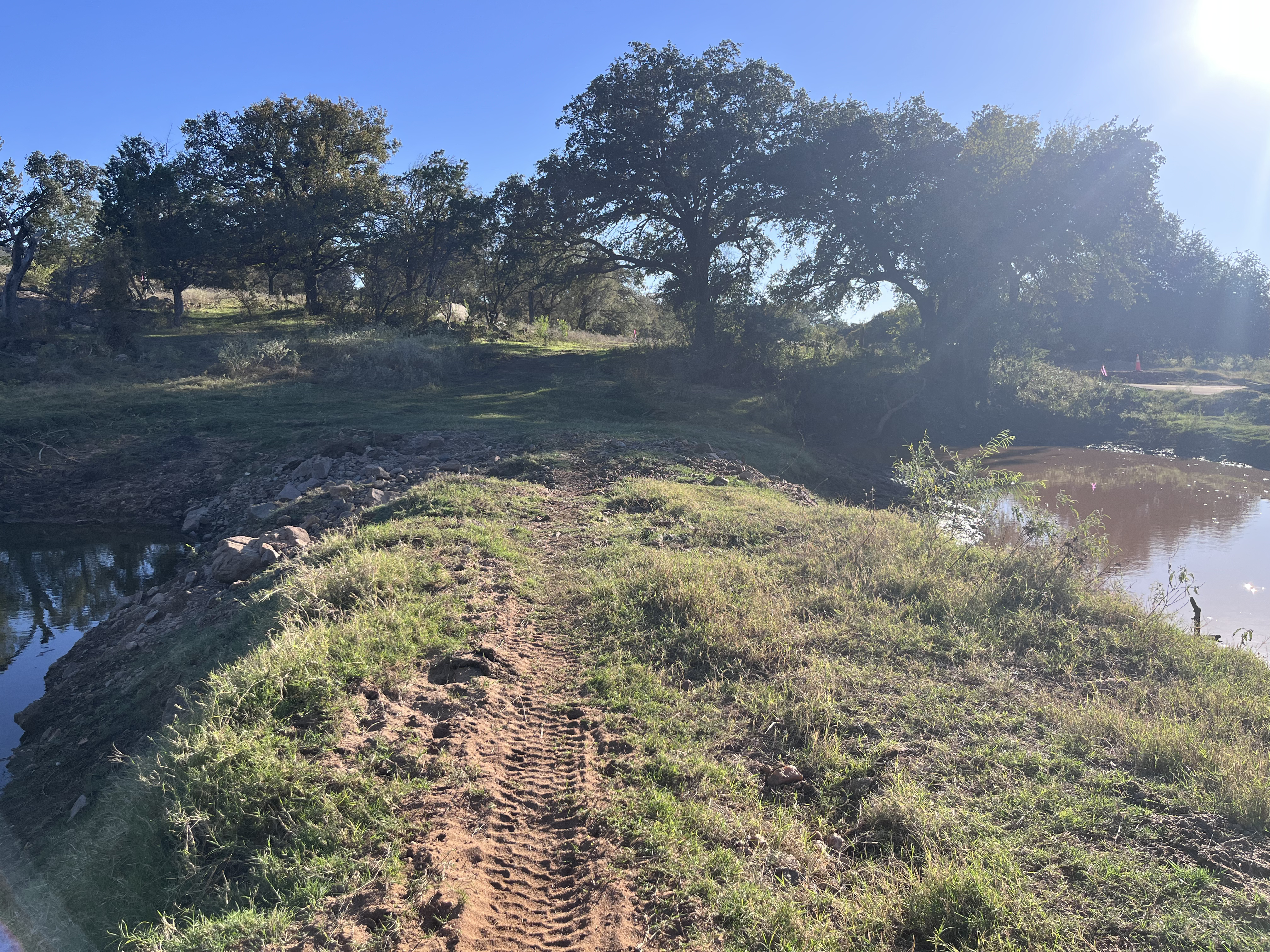
Land Bridge

Weird Course Marking (go right )
After this portion, you’ll start climbing the largest hill, gaining roughly 200 feet over about 1.2 miles, before heading back toward the start/finish line. Much of this section is on jeep roads. There’s one really steep stretch where I saw quite a few people start walking, though it’s short.
A long downhill follows, leading into more rolling single track. At this point the trails become considerably more technical than the rest of the course, with exposed granite and sharp, loose turns—but all of it is runnable if you have some trail experience.
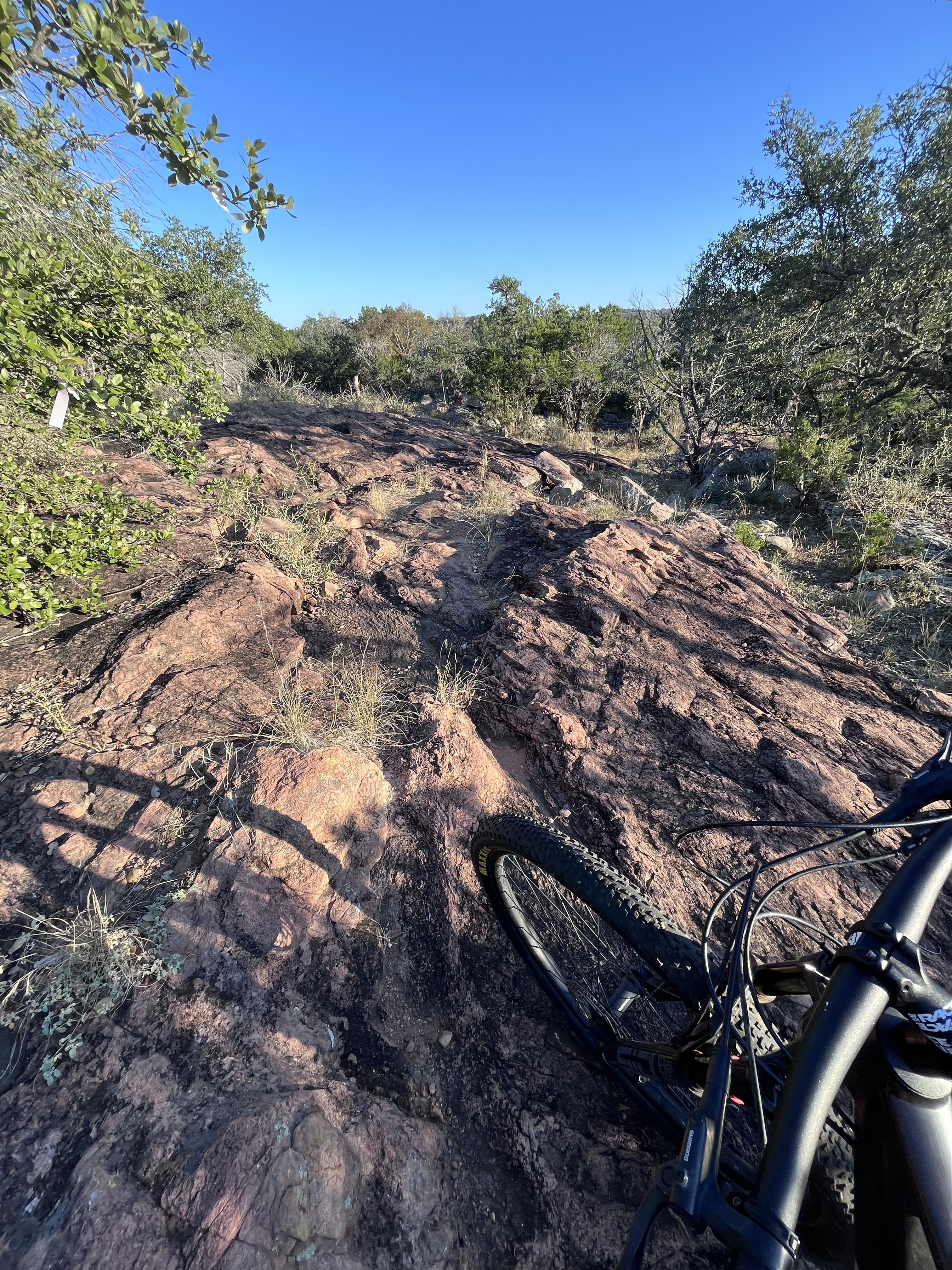
Techy Trail Example
You’ll then reach the gate and head back on the same single track you took out. This section has two-way traffic and can get a bit tight at times, especially when passing. At the end of the trail, you’ll cross the bike route and complete one final detour before returning to the start.
The loop is advertised as 10 miles, but I found it to be closer to 9.6 miles—likely due to a last minute course change near the start/finish section.
Race Day
Race start was at 7:30 AM, so we arrived around 6:30 AM to have enough time to pick up my bib, set up the drop bag, and use the bathroom. The parking situation is a bit hectic, so I’d recommend arriving early especially since the longer you wait, the more traffic there will be from mountain bike races and other running events. If you have a sedan or similar, you’ll be able to park closer to the start line, since the other parking area requires more clearance to access. The packet pickup, port-a-potties, start line, and drop bag area are all very close to each other. They also offer free hot coffee and food for sale near the bib pickup.
I have never felt so much anxiety in a start corral as I did at the Rattler. There were a ton of runners, and for some reason, the vibes felt high-stress. I would guess it’s because this is a pretty common first ultra and a relatively easy Leadville qualifier, so nerves were high. I lined up near the front, but there were probably 10 women ahead of me and about 50 men. I noticed a lot of runners carrying just a single handheld or no liquid at all, which made me a bit self-conscious because I had a full vest with 500 ml of water, 500 ml of Tailwind, and three gels. (Spoiler: my nutrition strategy ended up working really well)
The Actual Race
The race started incredibly fast. I tried to stay controlled, but it was easy to get swept up in the quicker pace on the first single track section. Once I hit the first jeep road, I slowed way down and reminded myself there was no point in trying to stick with the front women at this stage. Either they would maintain the pace and beat me, or they’d blow up and I’d catch them in the later miles.
The first loop was uneventful. I only passed a few women in the first few miles and was mostly just picking off men. By the second half of the lap, I had no idea where I stood overall or in my age group. If I passed anyone on the two-way single-track sections, I wouldn’t have known because there were so many other runners from different distances.
When I reached the feed zone, a spectator told me I was 6th overall female and that the others weren’t far ahead. I was thrilled and honestly surprised, because I had felt like I was in no man’s land with no chance of catching up, given how fast the other women had gone out. I crewed myself via drop bag, which was probably faster than having someone help to be honest. There were volunteers at the aid station ready to assist, but only one port-a-potty was available.
A helpful tip: if you’re refilling soft flasks, take them out completely. Don’t try to fill them while they’re still in your vest—you won’t be able to fill them fully and will end up spilling all over yourself.
I set out on lap two alone, but I quickly caught the 5th place woman on the jeep road climb and dropped her just as fast. At that point, I realized I wasn’t crazy; everyone else had gone out way too fast. I also got a text from my parents with my age-group position. I was in first by a solid margin, so my goal for the next 18 miles was simply to defend it.
The rest of the second lap was crowded, with lots of passing and lapping runners. I actually thought this worked in my favor because I always had someone up ahead to focus on. I caught one more woman in the last mile of the lap, which should have put me in 4th at that point. After completing lap two, I checked with my parents, and live timing reported me as 5th, which confused me because I hadn’t been passed. Without going into too many details, at least one person had cut the bridge loop section of the course on the second lap. Probably several people did, and likely unintentionally, since that section is chaotic and has four different marked routes. If you’re in contention for a podium, be mindful of your placement and how it changes throughout the course. Also, check for suspicious lap times—you’ll likely notice a significant difference if the course was cut.
Anyway, it started to get pretty hot at this point, and I think this is where my extra liquid really paid off. I was well hydrated, and the heat had very little impact on me. I could even pour water on myself because I had some to spare. Most of the lap was uneventful until about five miles to go, when I caught sight of second place. We kind of yo-yo'ed for a while, she would sprint ahead, then I would catch her. This went on for a few miles. Eventually, I got away and went all out to the finish to defend my lead. With one mile to go, I saw another woman and dug as deep as I could to pass and drop her.
When I crossed the finish line, no one knew if I had won. It turned out another woman had crossed about four minutes before me. After an eventful last five miles, I had officially placed second overall and won my age group by over an hour. A great end to a great race!
Leadville Qualifying System
Here is the Leadville Qualifying System in a nutshell: the top three overall men and women receive a coin and are then removed from the age-group standings. Each age group is allotted a number of coins based on its size. For example, my age group (females 29 and under) had 12 runners and was allotted one coin. If an age-group winner declines the coin, it passes to the next-place finisher. If an overall winner declines a coin, it goes into the race lottery.
Race Nutrition
I took 500 ml of Tailwind—plain on the first lap and raspberry caffeinated on the second and third—along with 500 ml of water. My plan was to take one large Precision gel per lap, plus two Advil, which I ended up not needing, thankfully! I finished almost all of the Tailwind and water each lap, but I struggled to take in as many gels as I had planned. I’m a super salty sweater, so the Tailwind really helped during the hotter parts of the race. I only managed to take one of the three large Precision gels because I was really focused and forgot but also because I had some trouble opening the twist-off lids on the more technical sections. Definitely some room for improvement there.
Obviously, everyone is different and you know what works best for your body, but be sure to factor in the heat, especially when it comes to sweat and hydration needs.
Final Thoughts
The Austin Rattler taught me that running isn’t linear. Getting faster and fitter is a complicated, dynamic process. Prioritize having fun, and the rest will follow. Sometimes it pays to go against the grain and trust your own intuition. Who knows, it might even land you at the start line of the Leadville 100.
My Advice for Future Rattler Participants
If you’re planning to run the Austin Rattler 50k in 2026 and beyond, here’s what I’ve learned:
-
Know the Course and Download the Route: You’ll probably go off course or follow someone off course if you don’t know the course or rely only on the markings. I strongly recommend previewing the course, but I recognize that isn’t always possible. At minimum, put the course on your watch. If you don’t have a watch with navigation, download the Ride with GPS app and load the course from the website (as of 2025, this is how the course is formatted). If you do go off course, backtrack—you risk disqualification if you miss a checkpoint, and you could get lost in the Reveille trails or interfere with the bike race.
-
Prepare for the Heat: Central Texas is hot, even in November, and much of the course is exposed. Hydration is key to combating heat, so practice taking in liquids and electrolytes during your training runs. Know what to wear to avoid chafing. Also, have ice in your drop bag. I stuffed my shirt and vest with ice on lap three, and it made a huge difference.
-
Run Your Own Pace: People went out fast, and many held that pace for several miles only to pay the price later. Let others pass—you’ll either catch them later, or they’ll maintain the pace and finish ahead no matter what. I started my first lap 48th overall and ended up finishing 16th. Patience pays, there’s plenty of ground to cover.
-
Stop at the Aid Stations: I was passed by several people in the aid stations, only to catch them a few miles later. I stopped both laps to refill my Tailwind and water flasks, and I think this gave me an edge later in the course. You know your nutrition and hydration plan best, so follow it, even if it means being passed briefly.
-
Enjoy It: Not just because this is a unique course with nice views and varied terrain, but because you will perform better if you’re having a good time. Soak in the excitement, encourage other runners, and immerse yourself in the experience. After my training build-up to this race, I am a wholehearted believer that your best performances happen when you’re having the most fun.
Train Smarter with Stack
Whether you're looking to race the Austin Rattler or just get more out of your running, Stack can help. Stack is a fatigue tracking app designed to help you optimize your training based on how your body actually responds to impulse. Balancing fatigue and performance is delicate and highly individual. Stack helps you monitor load, manage recovery, and reduce the risk of overtraining or undertraining so you can get the most out of every training cycle.
Give Stack a try today!
